
In forestry, agriculture and commercial wood supply, productivity is everything. Whether you’re supplying firewood to local retailers, supporting large-scale logging operations or managing firewood production on your own land, the equipment you use has a direct impact on output, profitability and efficiency. At the heart of modern operations is one indispensable piece of machinery: the firewood processing machine.
A firewood processing machine takes the labour-intensive work of cutting, splitting and preparing logs and transforms it into a fast, consistent and streamlined process. For businesses that rely on firewood production, it becomes the central pillar of day-to-day operations - the tool that determines how much you can produce, how consistently you can deliver and how safely your team can work.
AxeMaster understands these realities better than most. Their machines are built in Canada, engineered for rugged environments and designed with serious users in mind. Rather than offering basic consumer equipment or lightweight imports, they focus on heavy-duty machinery built for high-volume, long-term performance. This guide explores what a firewood processing machine is, how it works, who needs it and what sets AxeMaster apart as a trusted name in the industry.
What Is a Firewood Processing Machine?
A firewood processing machine is specialised industrial equipment that turns raw logs into uniform, cut-to-length firewood at scale. Instead of cutting logs with chainsaws and splitting them manually, operators feed logs into the machine, which handles cutting, splitting and output with precision.
The machine typically integrates several components into one system: a cutting blade or saw, a splitting wedge and a conveyor or output table. Once set up, the firewood processor creates evenly sized firewood with far less labour and far higher consistency than manual processing or small consumer-grade splitters.
Firewood processing machines are designed with efficiency and safety in mind. Their enclosed cutting systems, controlled hydraulic power, and mechanical consistency help reduce worker fatigue and minimise risk, especially compared to manual methods.
Because they automate multiple stages of firewood production, they are essential tools for anyone with
significant firewood demand.
Why Firewood Processing Machines Are Essential for High-Volume Operations
For small properties or casual users, manual splitting might still make sense. But for anyone processing wood commercially - or even just consistently - the difference a firewood processing machine makes is dramatic.
It allows one person to do the work of several. Logs that would normally take hours to prepare can be processed in minutes. The uniformity of the output also matters; retailers and delivery customers expect consistency, and processors deliver exactly that.
The productivity increase is not a marginal improvement - it is transformative. Businesses relying on regular firewood sales often find that without a firewood processor, demand quickly exceeds what manual tools can deliver. A machine built for efficiency puts control back in the operator’s hands, allowing production schedules to be met with certainty.
How a Firewood Processing Machine Works
The basic process of firewood processing is simple to describe but complex to engineer. Logs are loaded onto the machine, typically using an integrated table or loader. The machine cuts the log to the desired length using a heavy-duty saw or blade. Once the cut is made, the log section moves automatically into the splitting chamber, where hydraulic pressure forces it through a splitting wedge.
The split pieces exit the machine, often onto a conveyor or output deck, ready to be stacked, dried or packaged.
What makes the machine so effective is the integration of these processes. Cutting and splitting are normally separate tasks; a processor combines them into a single workflow. And when the machine is designed properly, with strong steel construction, high-output hydraulics, and smart engineering, the result is fast, safe, and efficient firewood production.
This is the design philosophy behind AxeMaster’s equipment. Each machine is built to handle the realities of Canadian forestry, where log sizes vary, conditions can be harsh, and downtime is costly. Their processors are engineered to eliminate friction from the workflow, allowing operators to produce more, faster, with less strain.
Key Considerations When Choosing a Firewood Processing Machine
Selecting the right processor is not a one-size-fits-all decision. Every operation has unique needs depending on log length, wood type, volume requirements and the physical environment. The best machine is the one that fits your workflow perfectly.
The first consideration is production volume. Commercial suppliers processing dozens of cords each day need a machine that can keep up without overheating or slowing down. Smaller operations may use a more compact model while still benefiting from industrial features.
Another factor is log size. Large-diameter logs require robust cutting and splitting power. Machines designed only for smaller pieces may struggle or fail when pushed beyond their limits. AxeMaster’s processors are built to handle substantial log sizes, making them reliable for both industrial and private operations with diverse wood types.
Power configuration also matters. Some processors run on gas, others on electric power. The choice depends on mobility needs, location and available infrastructure. AxeMaster assists customers in selecting the right configuration during the consultation stage, ensuring the machine integrates seamlessly with the worksite.
The Advantages of Locally Manufactured Heavy-Duty Machines
Imported firewood machines often look appealing because of lower upfront costs. But when used in real-world forestry environments, many struggle with durability, parts availability or long-term reliability.
Locally manufactured machines offer several advantages. AxeMaster builds in Alberta, which means every machine is designed for harsh weather, rugged terrain and long operational hours. Local manufacturing also ensures easier access to parts, direct customer support and a deeper understanding of user needs.
Durability is another advantage. Machines built in Canada are often made with higher-grade steel and reinforced components. When a processor needs to run day after day, these details make a significant difference.
AxeMaster’s machines reflect this philosophy: build it once, build it right and support it long after it leaves the workshop.
Why Efficiency and Productivity Matter in Firewood Operations
A firewood processing machine is ultimately an investment in time. The more efficiently it operates, the more profitable the business. Manual processing requires substantial labour, coordination and physical effort. Even small delays, blade issues or inconsistency in splitting can quickly add up to lost time.
A firewood processor solves these bottlenecks. By automating cutting and splitting, it standardises production and reduces downtime. Uniform firewood is easier to stack, ship and sell. And because the output is predictable, businesses can plan inventory with confidence.
The improved safety is equally important. Manual splitting is one of the highest-risk tasks on a worksite. A processor’s enclosed cutting system, hydraulic mechanisms and machine-controlled workflow dramatically reduce exposure to dangerous tasks.
For farms, landowners and small forestry operations, these efficiency gains create space for other priorities. For commercial suppliers, they enable growth and a stable supply.
Why It Matters More Than You Think
One of AxeMaster’s greatest strengths is its focus on custom builds. Every operation is different, and having a machine that matches the exact demands of log size, power needs, workflow, and mobility gives users a real advantage.
Customisation can include modifications to log tables, splitting chambers, conveyor systems or mobility options. A processor that fits the operation perfectly works faster, lasts longer and reduces maintenance issues.
This custom approach helps firewood suppliers optimise production. Rather than forcing a workflow to fit the machine, AxeMaster builds the machine to fit the workflow.
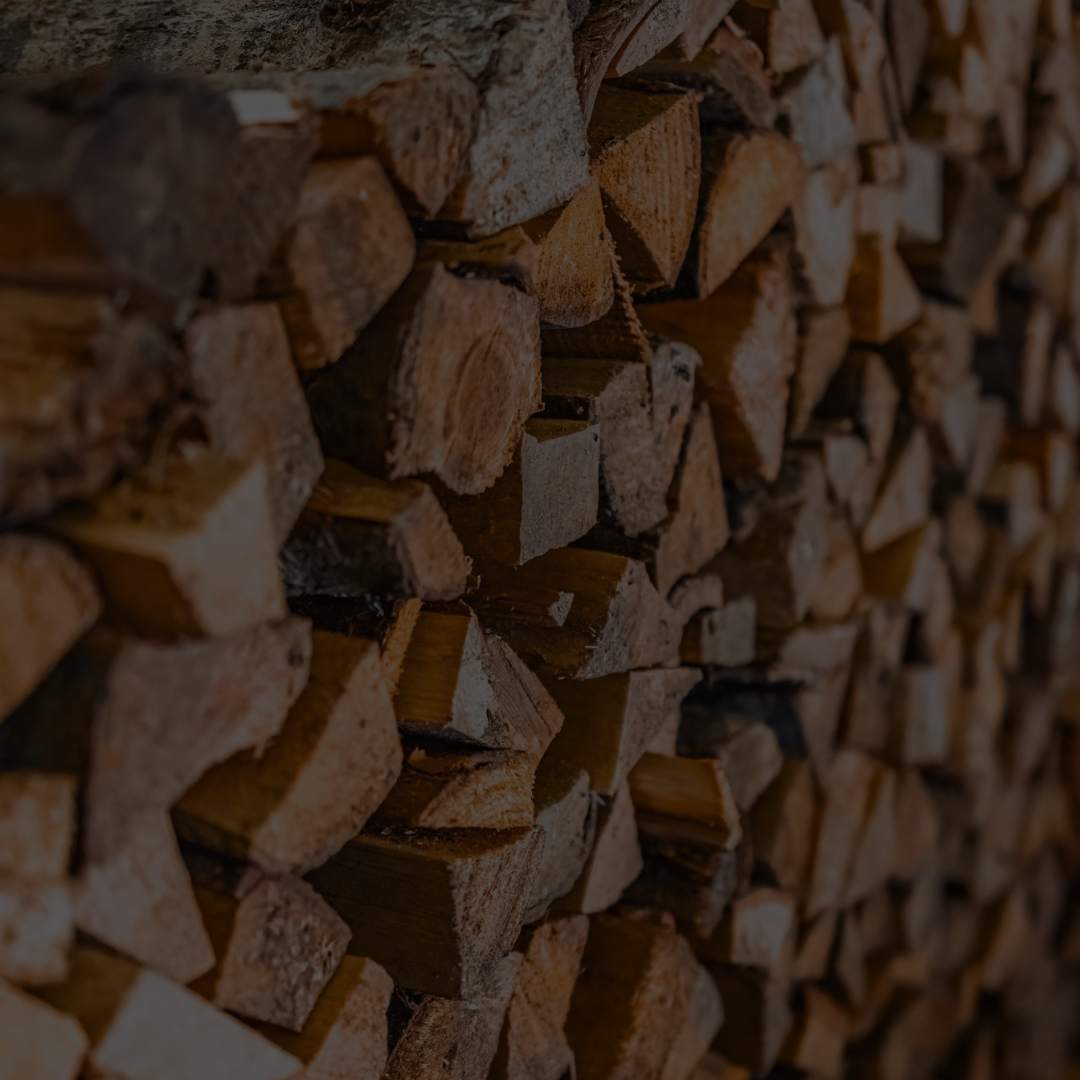
High Production
One of the standout features of the Axe Master is its impressive production capacity. This wood processor is capable of generating at least 4 full cords of wood each hour, allowing you to increase your output significantly. As you gain experience operating the machine, you can even enhance its performance further.
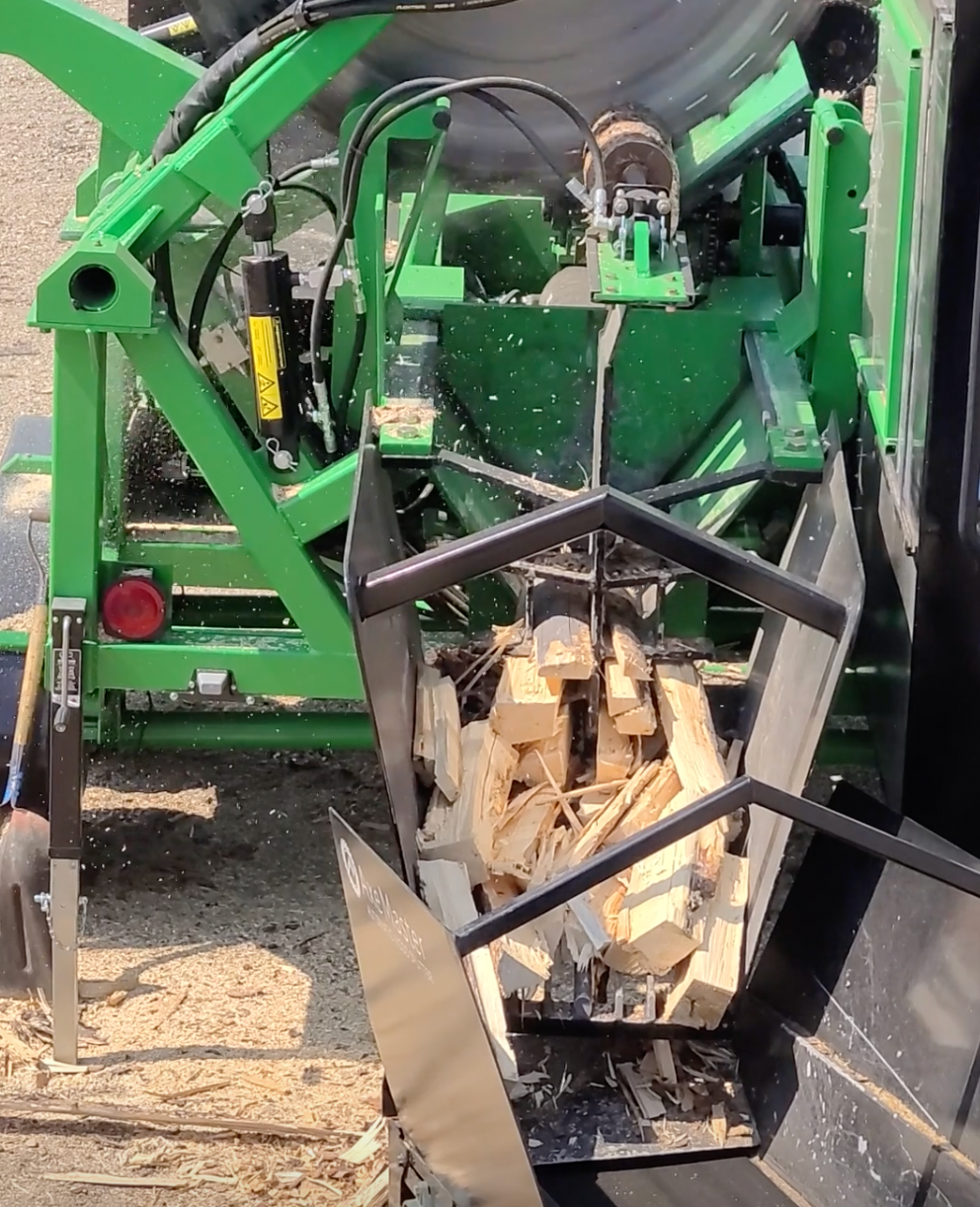
Durability
Built with robust construction, the Axe Master is designed for low maintenance and long-lasting performance. Unlike other wood processors that require constant upkeep, our model is engineered with minimal moving parts, making it an investment that pays off over time. In the rugged conditions of Alberta, having a durable wood processor is essential to ensure you can keep up with demand.
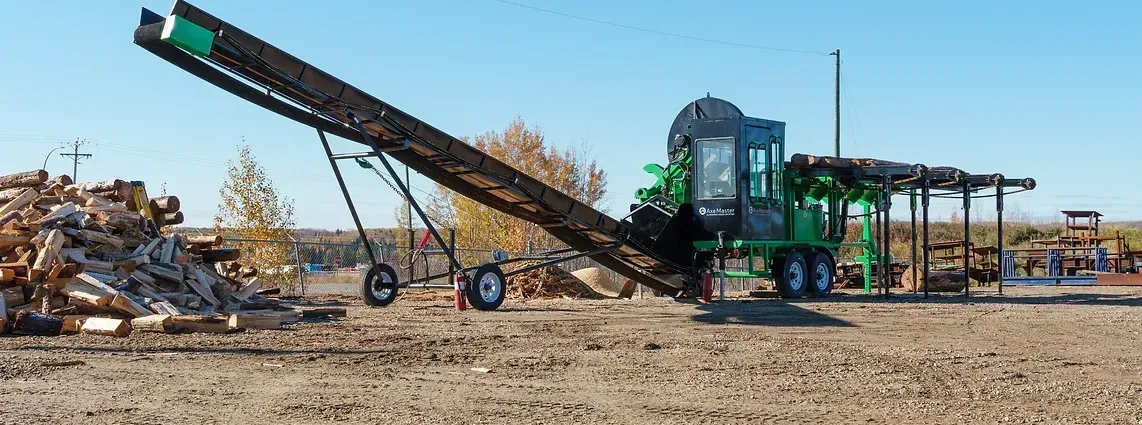
Efficiency
The Axe Master’s design focuses on optimizing performance. With user-friendly controls and intuitive operation, you can quickly adapt to using the machine, ensuring a smooth and hassle-free experience in your wood processing endeavors.
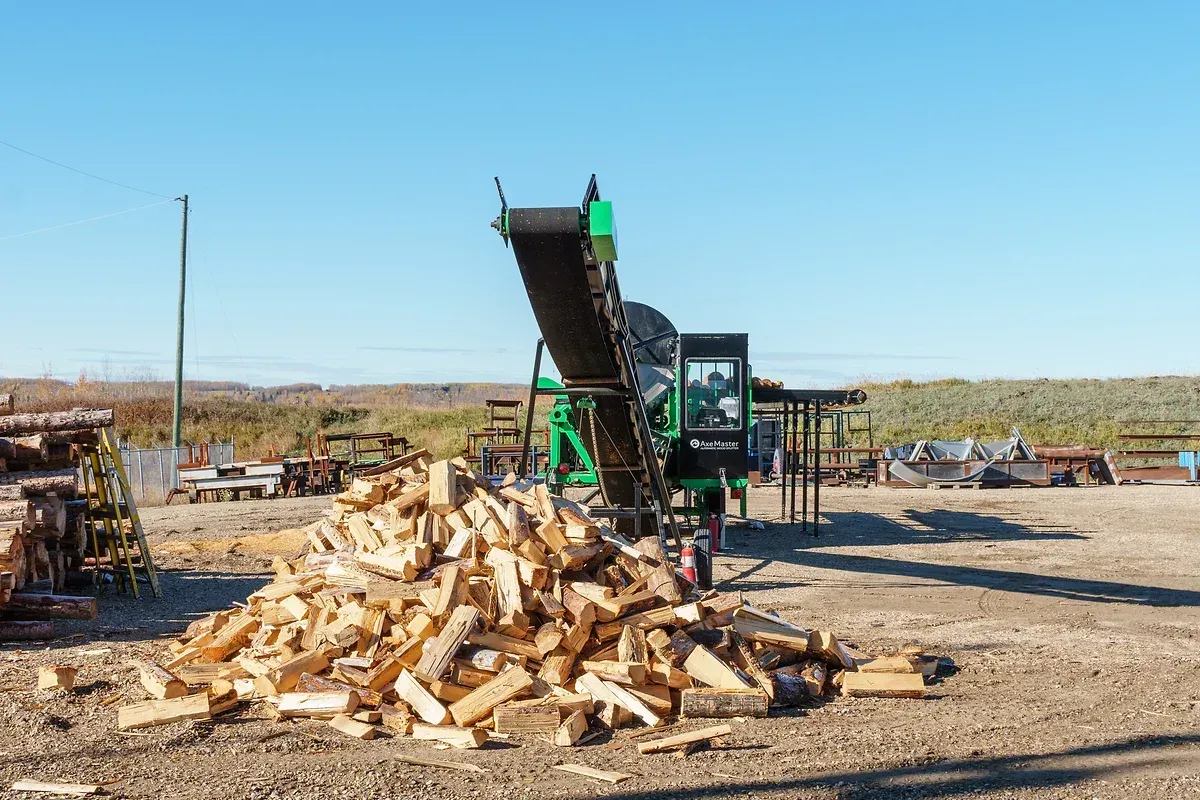
Customization Options
At RJ Machine Works, we understand that every wood processor user has unique needs. That’s why we offer customization options to tailor the Axe Master to your specific requirements. Whether you need a specific size, additional features, or adjustments to the components, we can create a wood processor that fits your exact specifications.
Who Needs a Firewood Processing Machine?
The versatility of firewood processors means they’re suitable for a wide range of users.
Commercial suppliers rely on them because demand requires reliable, high-volume production. Forestry contractors and logging operations use them to turn felled timber into consistent, market-ready firewood. Farms and rural landowners benefit from having a machine that turns raw timber into a valuable, usable resource.
Industrial sites and contractors appreciate being able to process wood with minimal downtime. Many use their processors not just for firewood but for clearing land, managing by-products and preparing heating stock.
Across all these use cases, the objective is the same: turn raw wood into a consistent, high-quality product efficiently and safely.
AxeMaster: Built for the Realities of Canadian Wood Processing
AxeMaster stands out because they are not simply a supplier - they are a manufacturer. Their machines are built locally, engineered for longevity and designed with the practical realities of forestry work in mind. The combination of craftsmanship, durability and customisation sets them apart from generic equipment suppliers.
Their processors handle large logs, operate reliably in cold weather and are designed for long-term performance. Customers value the local support, accessible parts and knowledgeable service, all of which stem from AxeMaster’s Canadian manufacturing base.
Because their machines are built to order, customers receive a processor that meets their specific needs rather than a one-size-fits-all compromise.
A Firewood Processing Machine Is an Investment in Productivity
Whether you operate a commercial firewood business, manage forestry operations or work on a rural property, the right firewood processing machine transforms your capability. It increases efficiency, improves safety, reduces labour demands and delivers consistent, high-quality firewood every time.
AxeMaster builds machines that reflect these priorities. Their equipment combines heavy-duty construction, custom engineering and local manufacturing insight - giving operators a reliable tool that can withstand demanding workloads and harsh environments.
If you’re ready to upgrade your production or begin scaling your firewood operation, AxeMaster offers the craftsmanship, durability and support needed to move forward with confidence.
